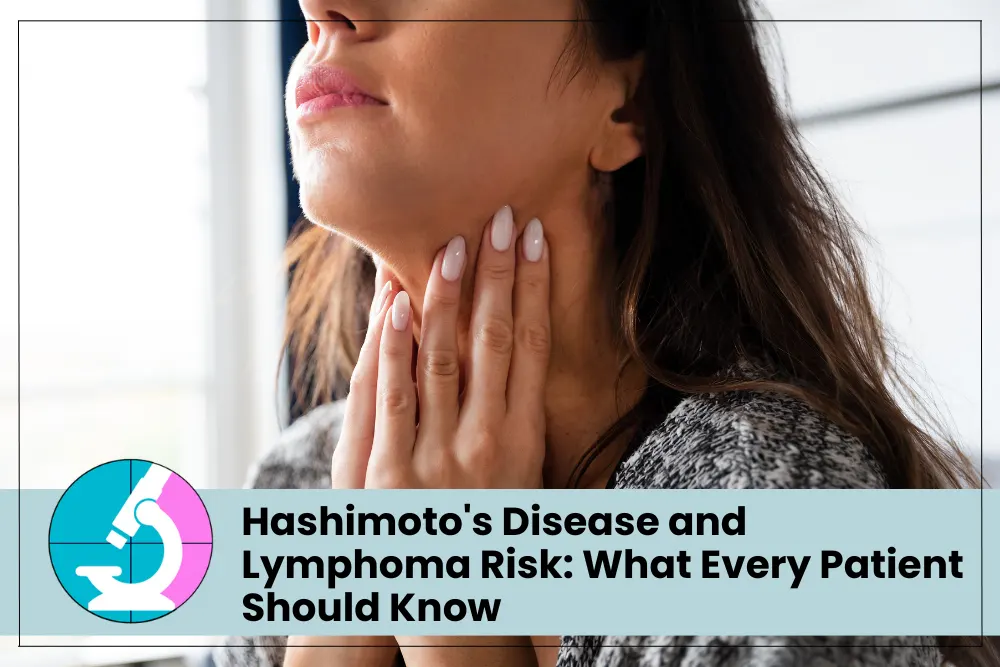

Living with Hashimoto’s Disease Means Understanding the Whole Picture
If you’ve been diagnosed with Hashimoto’s thyroiditis, you probably know the daily challenges that come with it. Fatigue, brain fog, weight changes, and the frustration of managing a condition that often feels invisible to everyone around you.
Most of my patients are focused on getting their thyroid levels under control and feeling like themselves again. The last thing they expect to hear about is lymphoma.
But there is an important connection between Hashimoto’s disease and a rare form of cancer called primary thyroid lymphoma, and it is something I believe every patient should understand. Not because I want you to be worried, but because I want you to be informed.
Throughout my career as a cytopathologist and Fine Needle Aspiration specialist, I have seen firsthand how early evaluation can make a tremendous difference when something changes in the thyroid. Most thyroid changes turn out to be benign. Occasionally, they do not. Knowing the warning signs and acting early can help ensure patients get answers quickly and receive the right thyroid cancer treatment if needed.
The good news is that primary thyroid lymphoma remains rare, even among people with Hashimoto’s disease. Still, understanding the connection can help you become a more informed advocate for your own health.
What Is Hashimoto’s Thyroiditis?
Hashimoto’s thyroiditis, often called Hashimoto’s disease, is the most common cause of hypothyroidism in the United States. It is an autoimmune condition, meaning the body’s immune system mistakenly attacks the thyroid gland.
Over time, this ongoing immune response damages the thyroid and reduces its ability to produce the hormones your body needs to regulate metabolism, energy levels, body temperature, and many other important functions.
Millions of Americans live with Hashimoto’s disease, and women are diagnosed far more frequently than men.
What makes Hashimoto’s relevant to this discussion is what is happening inside the thyroid over many years.
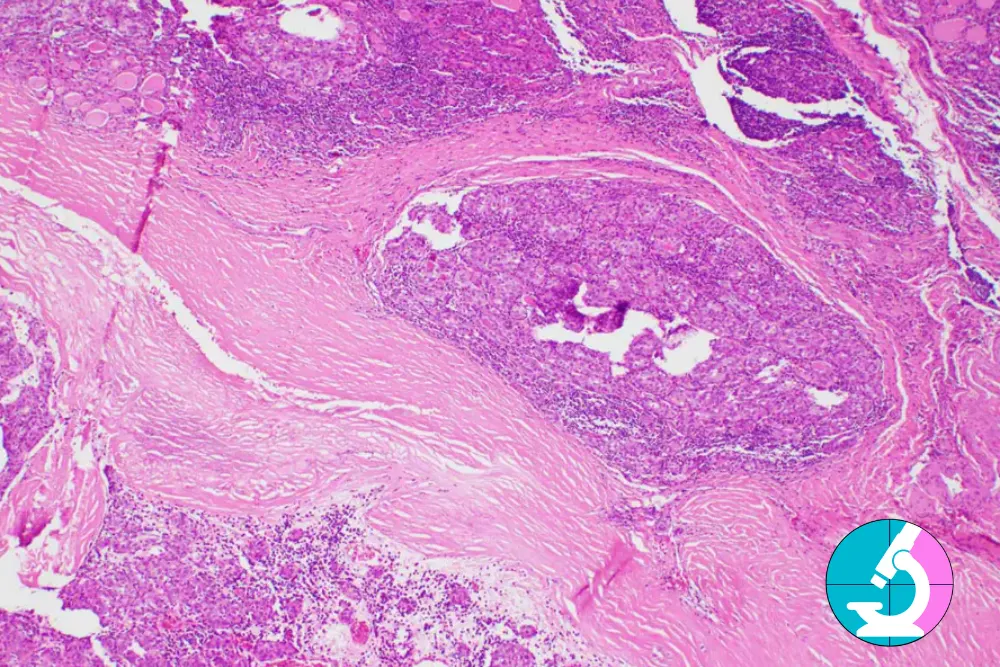
In Hashimoto’s disease, lymphocytes continuously move into the thyroid gland as part of the autoimmune process. Most of the time, this simply contributes to inflammation and gradual thyroid damage. In rare cases, however, those lymphocytes can undergo changes that eventually lead to lymphoma.
That is why physicians pay close attention when patients with Hashimoto’s develop new symptoms or experience significant changes in their thyroid.
Common symptoms of Hashimoto’s thyroiditis include:
- Fatigue and low energy
- Unexplained weight gain
- Sensitivity to cold temperatures
- Hair thinning or hair loss
- Brain fog and difficulty concentrating
- Depression or mood changes
- Dry skin and brittle nails
- Constipation
- Enlargement of the thyroid gland or neck swelling
Many of these symptoms develop gradually, which is why some patients live with Hashimoto’s for years before receiving a diagnosis.
Understanding the Connection Between Hashimoto’s Disease and Thyroid Lymphoma
Primary thyroid lymphoma is a rare cancer that develops within the thyroid gland itself. It accounts for only a small percentage of thyroid cancers and an even smaller percentage of lymphomas overall.
However, patients with Hashimoto’s thyroiditis have a significantly higher risk compared to the general population. Studies have shown that many patients diagnosed with primary thyroid lymphoma have a history of Hashimoto’s disease.
The reason comes back to chronic inflammation.
When lymphocytes remain active within the thyroid for years, the chance of abnormal cellular changes increases. Thankfully, even with this increased risk, thyroid lymphoma remains uncommon.
This is one of the most important points I want patients to understand. Having Hashimoto’s disease does not mean you are going to develop lymphoma. The vast majority of patients never will.
What it does mean is that changes in your thyroid deserve attention. A new lump, rapid growth of an existing nodule, increasing neck pressure, or new swallowing difficulties should not be ignored.
The goal is not fear. The goal is awareness.

What Symptoms Should Hashimoto’s Patients Watch For?
Most patients with Hashimoto’s never experience thyroid lymphoma. However, certain symptoms warrant prompt evaluation.
One of the most concerning signs is a rapidly enlarging thyroid mass. While many thyroid nodules grow very slowly over years, lymphoma often behaves differently and can enlarge within weeks.
Symptoms that should be evaluated promptly include:
- A new lump in the neck
- Rapid growth of an existing thyroid nodule
- Sudden enlargement of the thyroid gland
- Difficulty swallowing
- Persistent pressure in the neck or throat
- Hoarseness or voice changes
- Difficulty breathing
- Persistent cough not related to illness
- Unexplained fever
- Night sweats
- Significant unintentional weight loss
Many of these symptoms can occur with benign thyroid conditions as well. A growing thyroid cyst, inflammation, or even changes related to Hashimoto’s itself can produce similar symptoms.
The difference often lies in the speed at which the changes occur.
When something changes quickly, it deserves attention.

How Is Thyroid Lymphoma Diagnosed?
This is where my role becomes particularly important.
When a patient comes to me with a concerning thyroid mass, the first step is usually an ultrasound guided Fine Needle Aspiration biopsy. During the procedure, I collect cells directly from the area of concern and immediately evaluate the sample under the microscope.
One advantage of having a board certified cytopathologist perform the biopsy is that I can assess the adequacy of the sample in real time. If additional material is needed, I know it while the patient is still in the office. I then send the material for specialized testing (flow cytometry) to look for lymphoma.
This process helps reduce delays, improve diagnostic accuracy, and allows me to identify situations where additional testing may be necessary.
Fine Needle Aspiration is an excellent first step for evaluating thyroid masses and can often identify suspicious lymphoid populations that warrant further investigation.
When findings suggest lymphoma or additional information is needed, further testing may include:
- Core needle biopsy
- Flow cytometry
- Immunohistochemistry
- Advanced ultrasound evaluation
- Additional imaging studies
The key is ensuring the right testing is performed at the right time so patients receive accurate answers as quickly as possible.
How Is Thyroid Lymphoma Treated?
Treatment depends on the type of lymphoma and how far it has progressed at the time of diagnosis.
Unlike many thyroid cancers, thyroid lymphoma is often not treated with surgery. Instead, treatment frequently involves chemotherapy, immunotherapy, radiation therapy, or a combination of these approaches.
The encouraging news is that many thyroid lymphomas respond very well to treatment, particularly when diagnosed early.
Some forms of lymphoma grow slowly and carry an excellent prognosis. Others are more aggressive but still respond well to modern treatment protocols.
This is why early evaluation matters so much. The sooner a concerning thyroid mass is identified and diagnosed, the sooner an appropriate treatment plan can begin.
A Note From Dr. Nadelman on Hashimoto’s Disease
If you take one thing away from this article, let it be this: having Hashimoto’s thyroiditis does not mean you are going to develop lymphoma.
The vast majority of patients never will.
What I do want you to remember is that changes matter. A rapidly growing lump, new difficulty swallowing, voice changes, or increasing neck pressure should never be ignored.
As someone who evaluates thyroid nodules and performs Fine Needle Aspiration biopsies every day, I can tell you that the sooner we investigate a concerning finding, the sooner we can provide answers.
Most of the time, those answers are reassuring. When they are not, early diagnosis gives us the best opportunity to move forward quickly and appropriately.
If you have Hashimoto’s disease and have noticed changes in your thyroid, or if you simply want peace of mind, I encourage you to have it evaluated.
My Beverly Hills practice serves patients from throughout Southern California and beyond. In many cases, I can offer next day appointments, ultrasound-guided Fine Needle Aspiration biopsies, and preliminary results within 24 hours, helping patients get answers without the long waits that are common at many hospital based systems.
Knowledge is not something to fear. It is one of the most powerful tools you have for protecting your health.
FAQs
Yes. Many forms of thyroid lymphoma respond well to modern treatment options, including chemotherapy, immunotherapy, radiation therapy, or a combination of these approaches. Early diagnosis often leads to more treatment options and better outcomes.
Diagnosis typically begins with a physical examination, imaging studies, and a biopsy. Fine Needle Aspiration biopsy is often the first step because it allows physicians to collect cells from the thyroid for evaluation. Depending on the findings, additional specialized testing may be recommended to confirm the diagnosis and determine the specific lymphoma subtype.
Patients should seek medical evaluation if they notice a rapidly growing thyroid mass, sudden neck swelling, difficulty swallowing, hoarseness, persistent neck pressure, enlarged lymph nodes, unexplained weight loss, or night sweats. While these symptoms do not automatically mean lymphoma is present, they should not be ignored.
Hashimoto’s disease causes chronic inflammation within the thyroid gland. Over time, lymphocytes, a type of immune cell, accumulate in the thyroid as part of the autoimmune process. In rare cases, these cells can undergo abnormal changes that may eventually lead to lymphoma.
No. While patients with Hashimoto’s thyroiditis have a higher risk of developing primary thyroid lymphoma compared to the general population, the condition remains very rare. The vast majority of people with Hashimoto’s disease will never develop lymphoma. Understanding the connection simply helps ensure that any concerning changes are evaluated promptly.