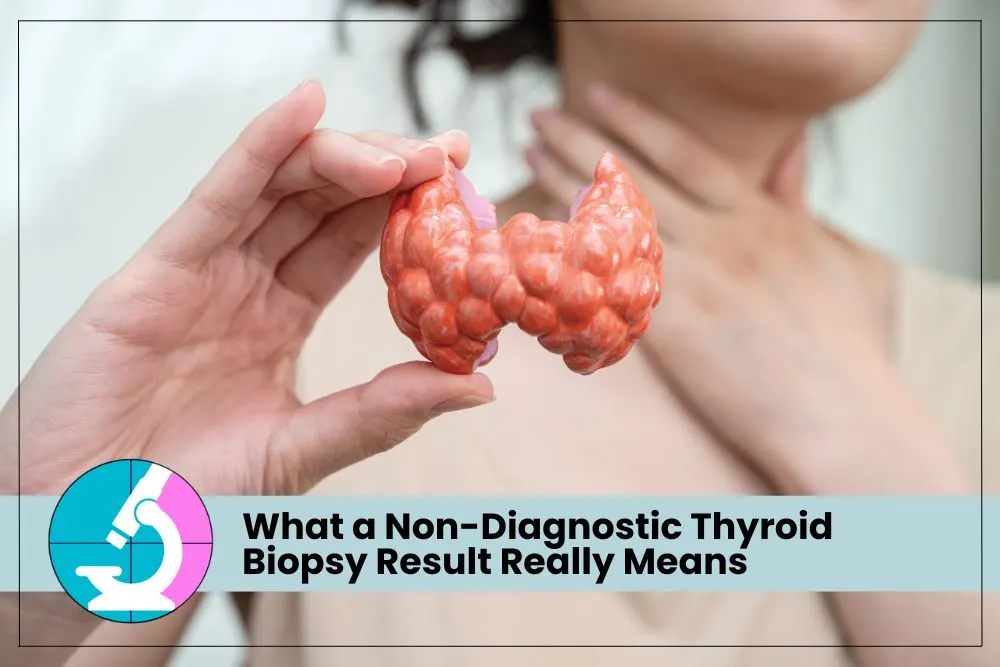

Understanding a Non-Diagnostic Thyroid Biopsy Result
One of the most frustrating phone calls a patient can receive after a thyroid biopsy is hearing that the result was “non-diagnostic.”
Most people assume that a biopsy should provide a clear answer. They expect to hear that a thyroid nodule is benign, suspicious, or cancerous. Instead, they are told that the sample could not be interpreted and that additional testing may be needed.
Naturally, this raises many questions.
Did something go wrong? Does a non-diagnostic result mean cancer was missed? Will another biopsy be necessary?
The good news is that a non-diagnostic thyroid biopsy does not mean cancer is present. It simply means that there were not enough appropriate cells in the sample for a pathologist to make a reliable diagnosis.
As a cytopathologist and Fine Needle Aspiration specialist, I spend my days evaluating thyroid nodules and biopsy specimens. One of the reasons I place so much emphasis on sample quality is that non-diagnostic results often lead to repeat procedures that patients would rather avoid.
Understanding why non-diagnostic results happen and how they can often be prevented is an important part of understanding thyroid biopsy results.
What Does Non-Diagnostic Mean in Thyroid Biopsy?
A non-diagnostic thyroid biopsy means that the sample collected during the Fine Needle Aspiration (FNA) procedure did not contain enough diagnostic material for accurate interpretation.
In other words, the pathologist cannot confidently determine whether the nodule is benign, suspicious, or malignant because there are not enough appropriate cells available for evaluation.
What a Non-Diagnostic Result Does Not Mean
A non-diagnostic result does not mean:
- The nodule is cancerous
- Cancer was found
- The biopsy was performed incorrectly
- Something dangerous was necessarily missed
Instead, it means that additional information is needed before a diagnosis can be made.
This distinction is important because many patients immediately assume the worst when they hear that their biopsy was inconclusive.
In reality, a non-diagnostic result is a sampling issue rather than a diagnosis.
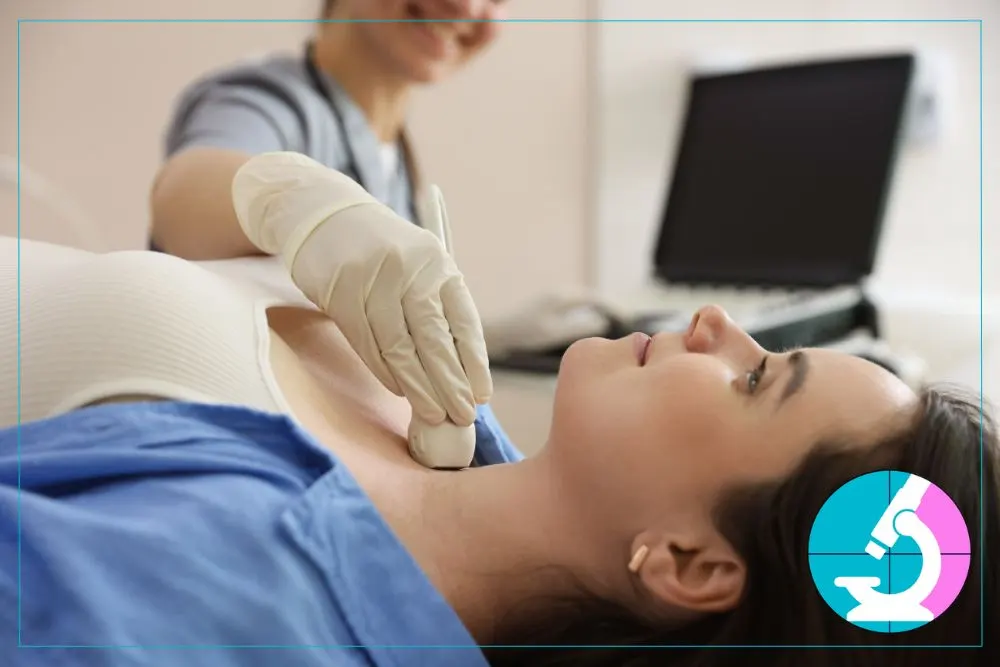
Patients who would like to better understand the biopsy process can learn more about Fine Needle Aspiration biopsy services and how thyroid nodules are evaluated.
Why Do Non-Diagnostic FNA Results Happen?
Not all thyroid nodules are equally easy to sample.
Some nodules contain abundant thyroid cells that are readily collected during biopsy. Others are more challenging because of their structure, composition, or location.
Common Causes of a Non-Diagnostic FNA
Several factors can contribute to a non-diagnostic result:
- Insufficient cellular material: The sample may not contain enough thyroid follicular cells for interpretation.
- Predominantly cystic nodules: Some thyroid nodules contain mostly fluid and very few diagnostic cells.
- Blood obscuring the specimen: Excessive blood can interfere with microscopic evaluation.
- Improper processing of the specimen: Sometimes, samples are not properly fixed, which causes artifacts.
- Technical sampling challenges: Certain nodules are simply more difficult to sample adequately than others.
While these factors can occur in any practice, the frequency of non-diagnostic results often varies significantly between providers.
This is one reason why experience matters.
Why Non-Diagnostic Rates Matter More Than Most Patients Realize
Many patients are never told about non-diagnostic rates when selecting a provider for thyroid biopsy.
Yet this number can have a major impact on the patient experience.
A high non-diagnostic rate means more patients require repeat biopsies, additional appointments, and extended periods of uncertainty while waiting for answers.
The Real Cost of a Repeat Thyroid Biopsy
When a biopsy is non-diagnostic, patients may face:
- Additional procedures
- More time waiting for answers
- Additional medical expenses
- Increased anxiety and uncertainty
- Delayed treatment decisions
Most patients would understandably prefer to obtain an adequate sample the first time.
This is why non-diagnostic rates are an important quality metric in thyroid biopsy practice.
How Cytopathologists Help Reduce Non-Diagnostic Results
One of the biggest differences between biopsy practices is who is actually evaluating the specimen.
In many settings, the physician performing the biopsy collects the sample and sends it to a laboratory for later review.
As a board-certified cytopathologist, I both perform the biopsy and evaluate the specimen.
This provides a significant advantage because I can assess sample adequacy immediately.
The Importance of Rapid On-Site Evaluation (ROSE)
Rapid On-Site Evaluation, commonly known as ROSE, allows me to examine the collected material under the microscope during the procedure itself.
If I determine that additional diagnostic cells are needed, I can obtain more samples while the patient is still in the office.
This helps reduce the likelihood that a patient will leave with an inadequate specimen.
The ability to evaluate adequacy in real time is one reason my non-diagnostic rate is approximately 0.01%, significantly lower than what is often reported in other practices.
Patients interested in learning more about the procedure itself can review what Fine Needle Aspiration is and what to expect.
Why Society of Cytopathology Reporting Guidelines Matter
Non-diagnostic results are not determined arbitrarily.
Pathologists follow established criteria developed through years of research and clinical experience.
The Bethesda System for Reporting Thyroid Cytopathology provides standardized terminology and diagnostic categories used by cytopathologists nationwide.
These guidelines help ensure that patients receive consistent and reliable reporting.
Why Standardized Reporting Is Important
Standardized terminology helps:
- Improve communication between physicians
- Guide appropriate patient management
- Reduce confusion regarding biopsy results
- Support evidence-based decision making
Following established Society of Cytopathology recommendations helps ensure that non-diagnostic results are used appropriately and consistently.
The goal is not simply to provide an answer. The goal is to provide an answer that is accurate and clinically meaningful.
How TIRADS and Biopsy Results Work Together
Ultrasound findings and biopsy results are both important components of thyroid nodule evaluation.
A TIRADS score helps estimate the likelihood that a thyroid nodule may be suspicious, while Fine Needle Aspiration provides direct cellular information.
Neither should be viewed in isolation.
As I discussed in my article on why a low TIRADS score doesn’t always mean a thyroid nodule is safe, ultrasound interpretation and clinical judgment remain important parts of the diagnostic process.
A low TIRADS score does not guarantee a benign outcome, just as a non-diagnostic biopsy does not automatically indicate cancer.
The best decisions come from combining imaging findings, pathology results, and individualized clinical assessment.
What Patients Should Take Away From a Non-Diagnostic Result
If you receive a non-diagnostic thyroid biopsy result, do not panic.
A non-diagnostic result does not mean cancer was found. It simply means that additional information may be needed before a diagnosis can be made.
The more important question is why the result was non-diagnostic and whether the biopsy process included safeguards designed to maximize sample adequacy.
Who performs your biopsy matters.
Who evaluates your specimen matters.
And the ability to determine adequacy during the procedure can make a meaningful difference in whether patients receive answers the first time or need to return for another biopsy.
As a cytopathologist and Fine Needle Aspiration specialist, my goal is always to provide patients with the most accurate diagnosis possible while minimizing unnecessary repeat procedures and delays in care.
FAQs
Higher non-diagnostic rates often lead to more repeat procedures, additional costs, delayed diagnoses, and increased patient anxiety. Lower non-diagnostic rates generally reflect more effective sampling and specimen evaluation.
Possibly. Depending on the ultrasound findings, TIRADS score, and clinical situation, a repeat biopsy may be recommended to obtain an adequate sample for evaluation.
No. A non-diagnostic thyroid biopsy simply means there were not enough appropriate cells in the sample to make a reliable diagnosis. It is not a cancer diagnosis.