
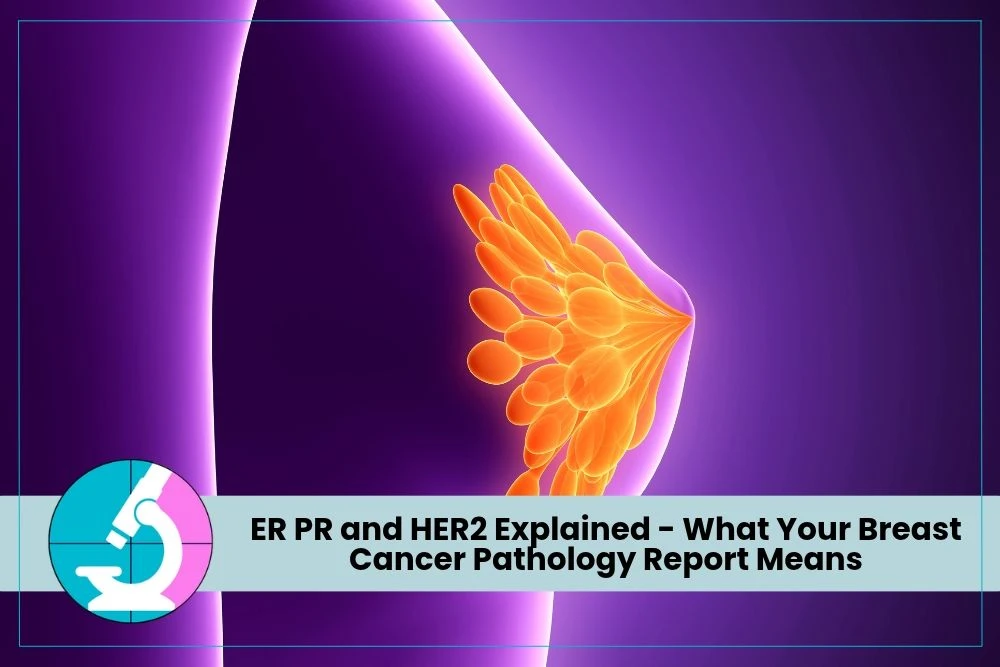

Understanding the Three Markers on Your Pathology Report
A breast cancer pathology report can feel like a page of abbreviations at the exact moment you want plain answers. ER, PR, and HER2 are three important additional markers because they describe signals that may be helping tumor cells grow. Your care team also considers the tumor type, grade, size, lymph node findings, imaging, and your overall health. However, receptor status results help doctors identify treatments that are more likely to work.
ER means estrogen receptor, PR means progesterone receptor, and HER2 refers to human epidermal growth factor receptor 2. A pathologist evaluates tissue or cells and diagnoses whether the lump is cancer; in addition, the pathologist reports if these markers are present, absent, or need additional testing. When you review breast cancer and fine needle aspiration information with a specialist, remember that the test used to collect the sample affects what the laboratory can assess. Fine needle aspiration can quickly evaluate a lump and tell whether the cells are cancerous. However, sometimes additional tissue is needed to evaluate receptor status, usually obtained by core or surgical biopsy.
A positive receptor may create a treatment opportunity. A negative result may point the team toward a different strategy. Ask your oncologist to interpret every value in the context of your diagnosis.
What ER and PR Results Mean
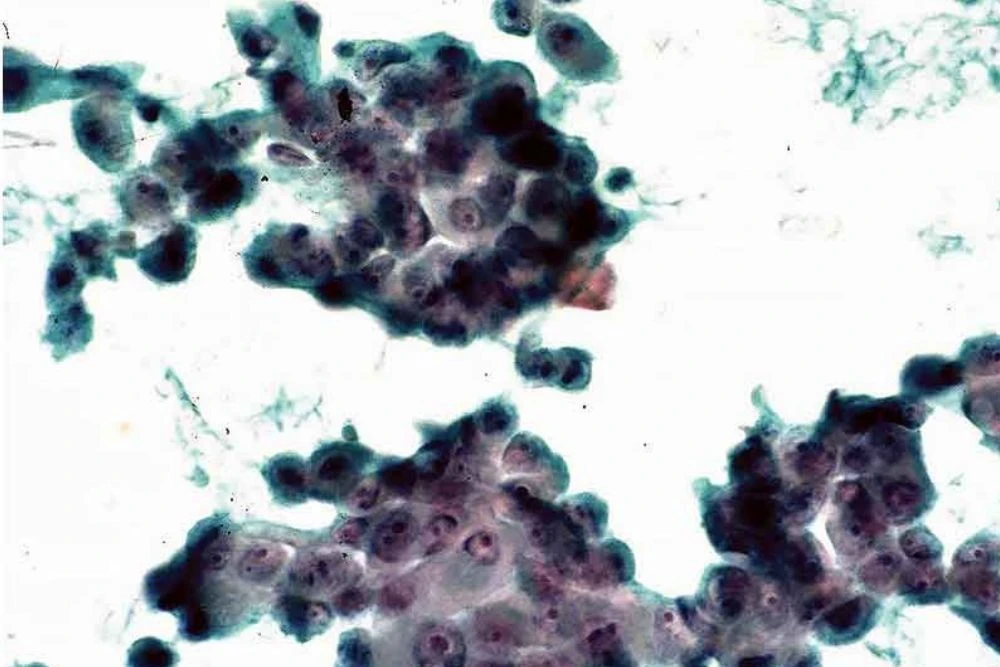
Estrogen and progesterone affect normal breast cells. Some cancer cells keep receptors for one or both hormones and can use those signals to grow. The laboratory uses immunohistochemistry, often shortened to IHC, to stain tumor cells and estimate how strong and prevalent receptor activity is. Reports may list a percentage, staining intensity, and a final positive or negative interpretation.
ER-positive disease means the tumor has enough estrogen receptors to meet the laboratory’s accepted threshold. PR-positive disease means progesterone receptors are detected. Many tumors are positive for both, but a tumor can be ER positive and PR negative, or less commonly show another pattern. Your clinician should explain the laboratory’s cutoff and whether the result is strong, weak, or low positive.
- Hormone receptor positive cancers often respond to endocrine therapy, which is designed to reduce hormone signaling or block the receptor.
- The exact medicine and duration depend on factors such as menopausal status, stage, recurrence risk, side effects, and previous treatment.
- A low positive or discordant result may prompt careful review of the specimen and discussion among pathology and oncology teams.
Hormone receptor status can influence long-term treatment, but it does not replace staging or grading. It is also possible for receptor status to differ between an original tumor and a later recurrence. That is one reason a new or changing lesion may need fresh sampling rather than assumptions based on an older report.
What HER2 Results Mean
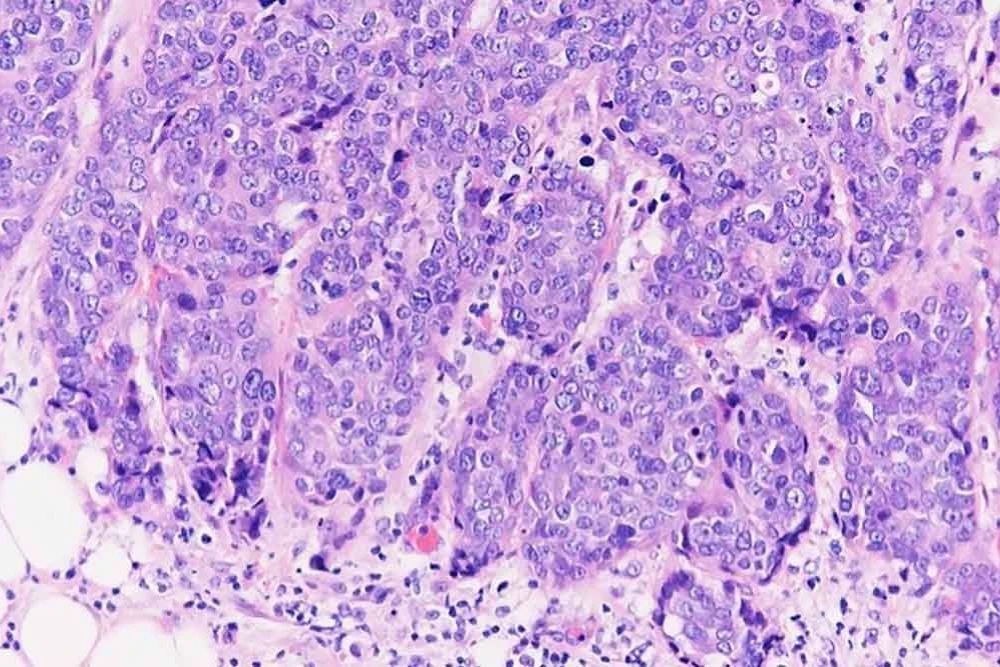
HER2 is a protein that helps regulate cell growth. Some breast cancers have extra copies of the HER2 gene or produce too much HER2 protein. These tumors may grow more aggressively without treatment, but they may also respond to highly effective HER2-targeted medicines.
HER2 testing usually begins with IHC. An IHC score of 0 or 1+ is generally considered HER2 negative. A score of 3+ is generally considered HER2 positive. A score of 2+ is equivocal, meaning another test is needed. In situ hybridization, often shown as ISH or FISH, checks whether the HER2 gene is amplified and can resolve many equivocal cases. Your report may include both results.
- HER2 positive means the tumor meets current criteria for HER2 overexpression or gene amplification and may be eligible for HER2-directed treatment.
- HER2 negative means the tumor does not meet those criteria, although the exact IHC score can still matter for certain newer treatment decisions.
- HER2 equivocal is not a final answer. The laboratory should complete the recommended follow-up test before the tumor is classified.
Do not interpret a single number without the laboratory’s conclusion. Testing standards evolve, and treatment options depend on stage and clinical context. Your oncologist may use terms such as HER2-low to discuss eligibility for specific therapies in advanced disease, but that term does not replace the standard positive or negative classification on the pathology report.
How the Results Work Together
Clinicians often group results into broad biologic subtypes. A tumor that is ER positive, PR positive, and HER2 negative is commonly called hormone receptor positive, HER2 negative. A tumor may be hormone receptor positive and HER2 positive, creating possible roles for both endocrine and HER2-targeted treatment. A tumor that is ER negative, PR negative, and HER2 positive may be treated with HER2-targeted therapy plus other medicines.
Triple-negative breast cancer means ER, PR, and HER2 all test negative under current criteria. It does not mean there are no treatment options. Chemotherapy, immunotherapy in appropriate cases, surgery, radiation, and clinical trials may all be considered. The best plan depends on stage, biomarkers, genetic factors, response to treatment, and individual health needs.
Receptor status is one piece of a larger diagnostic picture.
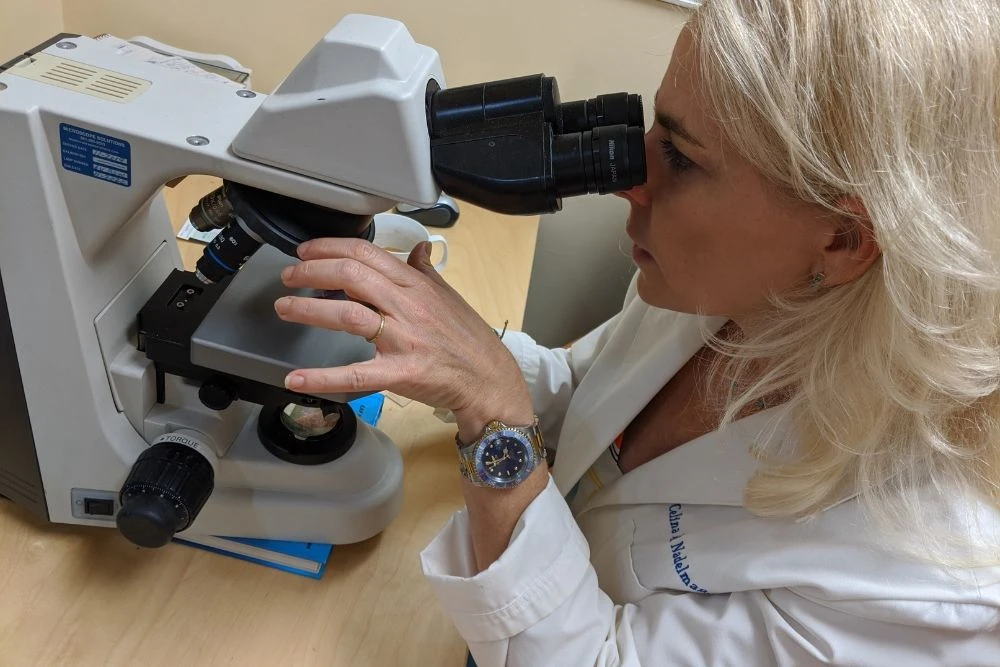
A board-certified pathologist integrates the microscopic findings and testing so the oncology team can make informed decisions. You can learn more about Dr. Celina Nadelman’s diagnostic background on the practice’s about page.
Questions to Ask When You Review the Report
Bring a copy of the pathology report to your oncology appointment and write down the answers. If a result is preliminary, equivocal, or based on a small sample, ask what testing remains. Useful questions include:
- What are the exact ER and PR percentages, and does either result fall into a low-positive range that needs added discussion?
- What is the HER2 IHC score, and if it is 2+, was ISH or FISH performed to reach a final classification?
- Was receptor testing performed on the primary breast tumor, a lymph node, or another site, and is the sample adequate for the decisions being made?
- How do grade, stage, lymph node findings, and any genomic results change the meaning of the receptor profile?
- Which treatments are recommended because of these markers, and what benefits, risks, and alternatives should I understand?
You may also ask whether the slides should be reviewed by another breast pathologist when the findings are unusual or do not fit the imaging and clinical picture. A request for clarification is reasonable. The goal is not to memorize laboratory terminology. It is to understand which results are final, which require confirmation, and how they influence the next decision.
Keep a personal copy of the final report, including any addendum with receptor or genetic testing. Pathology reports can be updated after additional stains, outside review, or a larger surgical specimen. If the language changes, ask which version should guide treatment. It may help to keep a short list of the diagnosis, ER percentage, PR percentage, HER2 IHC score, any ISH result, grade, and stage. That summary can make future appointments easier, but the original report remains the authoritative record.
Breast cancer care is usually multidisciplinary. Pathologists establish the diagnosis and biomarker results; radiologists correlate imaging; surgeons, medical oncologists, and radiation oncologists apply those findings to the treatment plan. When the pieces do not align, the team may request another sample or review the slides together. Concordance between the clinical exam, imaging, and pathology is essential. A careful review protects patients from both unnecessary procedures and delays in needed care.
Frequently Asked Questions
Does ER positive mean estrogen caused my breast cancer?
No. ER positive means the tumor cells have estrogen receptors and may use estrogen signaling to grow. Breast cancer develops through many interacting genetic, hormonal, environmental, and age-related factors. The result helps guide treatment; it does not identify a single personal cause.
Is HER2 positive always a worse diagnosis?
HER2 positive cancers can behave aggressively without treatment, but modern HER2-targeted medicines have substantially changed care. Prognosis depends on stage, response to treatment, overall tumor biology, and individual health, not on HER2 status alone.
What does triple negative mean?
Triple negative means the tumor is negative for ER, PR, and HER2 under current testing criteria. It rules out endocrine and standard HER2-directed treatment for that tumor profile, but it does not rule out chemotherapy, immunotherapy for eligible patients, surgery, radiation, or clinical trials.
Can receptor status change over time?
Yes. Receptor status can differ between the original tumor and a recurrence or metastatic site. When it is safe and clinically useful, doctors may biopsy a new lesion so treatment decisions are based on current disease rather than an old result.
Can FNA determine ER PR and HER2 status?
FNA can rapidly determine whether a breast lump contains suspicious or malignant cells and can be valuable for diagnosis and staging. However, receptor testing for a primary breast cancer generally relies on an adequate tissue specimen, often from core or surgical biopsy.
Have questions about a breast lump or what your pathology results mean? Contact Dr. Nadelman for expert diagnostic guidance and minimally invasive FNA evaluation in Los Angeles.