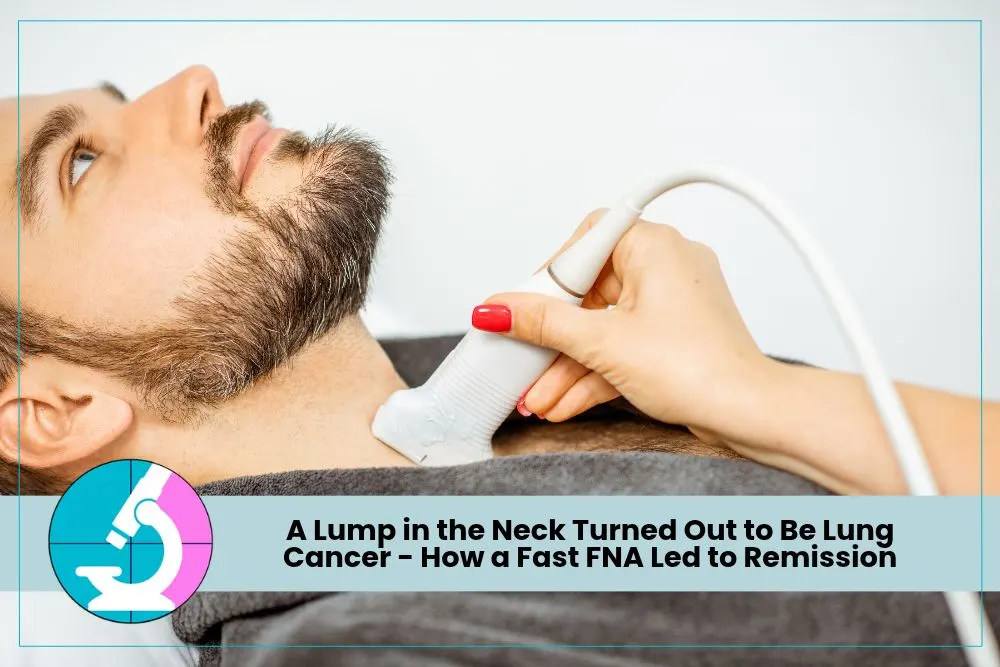

November is Lung Cancer Awareness Month. Most people picture a cough, chest pain, or an abnormal chest X-ray when they think about how lung cancer is found. For one of Dr. Celina Nadelman’s patients, the first sign was none of those. It was a lump in his neck.
“He had no idea,” Dr. Nadelman recalls. “He just had a lump in his neck.”
A fine needle aspiration, or FNA, of that lump showed cancer cells. A panel of special stains on those cells pointed to the lungs as the source. With a clear diagnosis in hand, he skipped surgery entirely, went straight to immunotherapy, and today he is in remission.
Here is how that happened, and why a neck lump that does not go away deserves a closer look.
The Case – A Lump Above the Collarbone
The patient came in with a firm mass at the base of his neck, in the supraclavicular area just above the collarbone. He had no known lung disease and no diagnosis of cancer. As far as he knew, it was simply a lump.
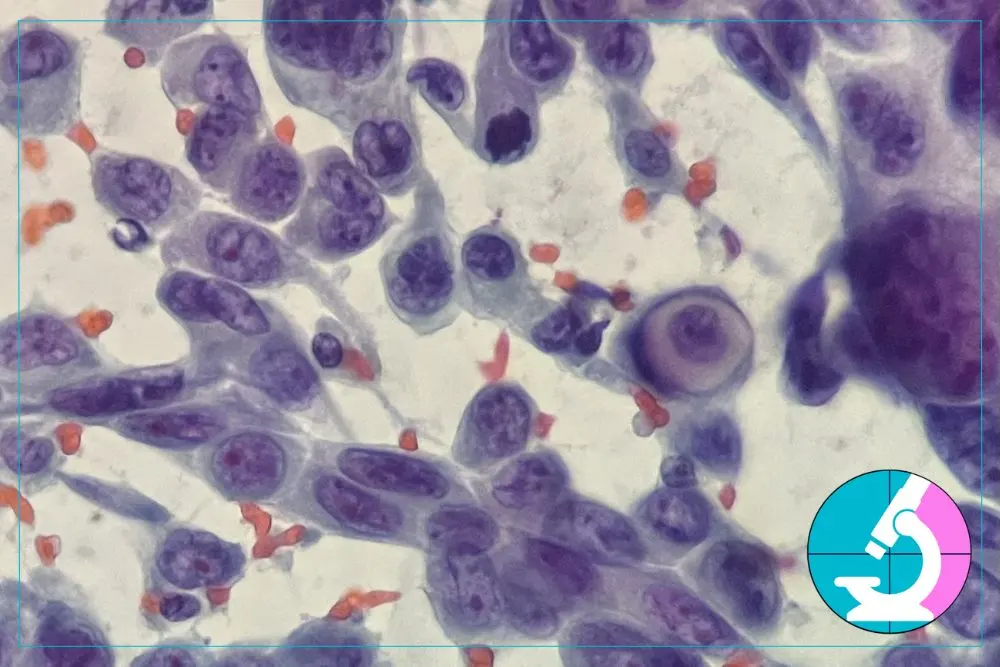
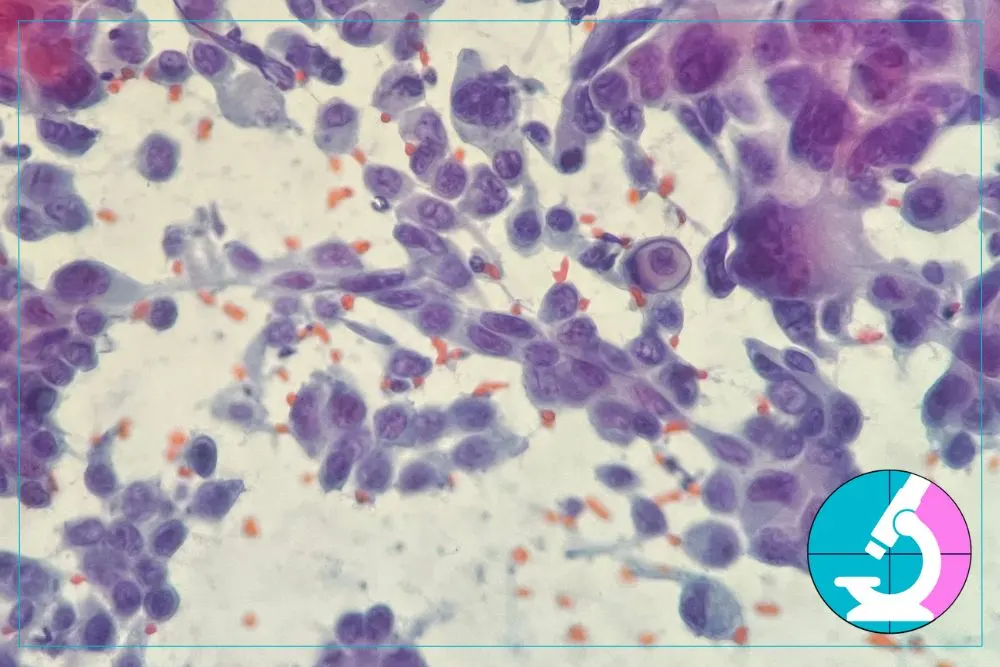
Dr. Nadelman performed an FNA on the lump. Under the microscope, the cells looked like cancer. That answered the first question. It also raised a second one that matters just as much for treatment. Where did this cancer start?
It is worth noting what the FNA did not involve. Dr. Nadelman does not biopsy the lungs. Lung tissue sits too deep to reach safely in an office and needs to be sampled in or near a hospital. What she could reach was the lymph node in his neck, where the cancer had already traveled. That node became the fastest route to an answer.
Dr. Nadelman also shared something unusual about this case. As a cytopathologist, she typically makes the diagnosis and does not see patients again once their care moves on to other specialists. This patient came back to see her, and he was in remission.
Why Cancer Can Show Up Somewhere Other Than Where It Started
To understand this case, it helps to know what cancer is at the cellular level. Dr. Nadelman explains it this way.
A neoplasm is a growth made of cloned cells, all copies of the same original cell. A benign neoplasm stays in its place. It grows, but it does not break through the thin boundary that holds it in, called the basement membrane. A uterine fibroid, or leiomyoma, is a common example. It does not spread to other parts of the body.
Cancer is a malignant neoplasm. It breaks through that boundary and can push into nearby tissue or enter the bloodstream or lymphatic channels and travel somewhere else. When cancer cells settle in a new location, that is called metastasis.
That is why a cancer can first be noticed far from where it began. Lymph nodes in the lower neck and above the collarbone drain lymph from the chest and other areas of the body, so cancers from the lungs and other organs can spread there. When a cancer is found in a spot that is not its starting point, pathologists treat it as a cancer of unknown origin until they can identify the source.
How the Stains Pointed to the Lungs
Identifying the source is where pathology does some of its most important work. Years ago, Dr. Nadelman used electron microscopy to help answer that question. Today, the main tool is a panel of immunostains.
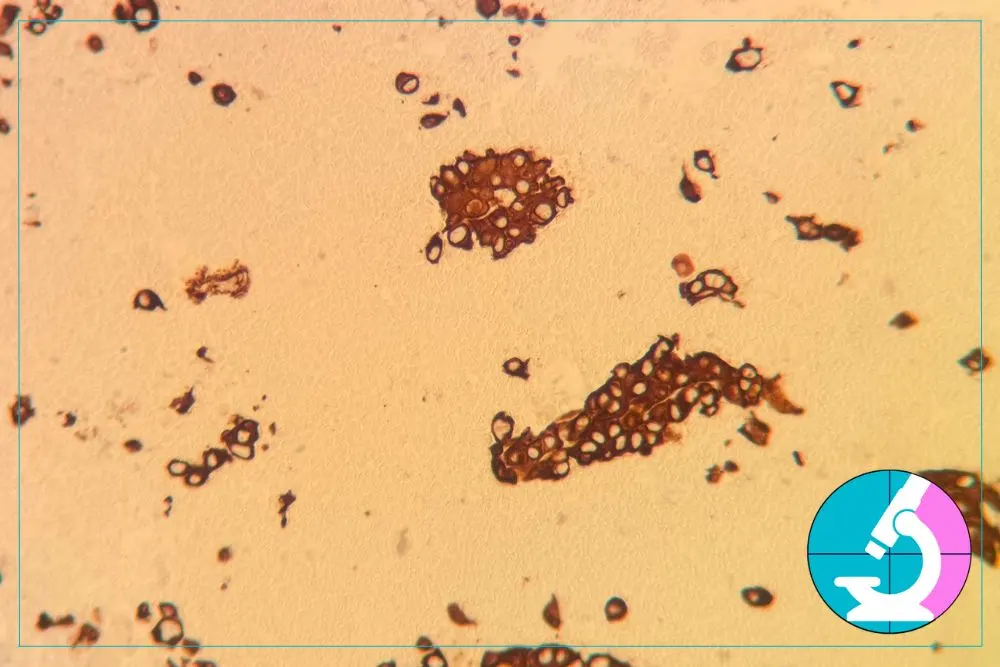
Immunostains use antibodies that attach to specific proteins inside or on the surface of cells. When the protein is present, the stain lights up in color, usually brown or red, under the microscope. Different cancers carry different combinations of these proteins. Running a panel of stains narrows the possible origin down to a short list.
For this patient, the cells were prepared several ways.
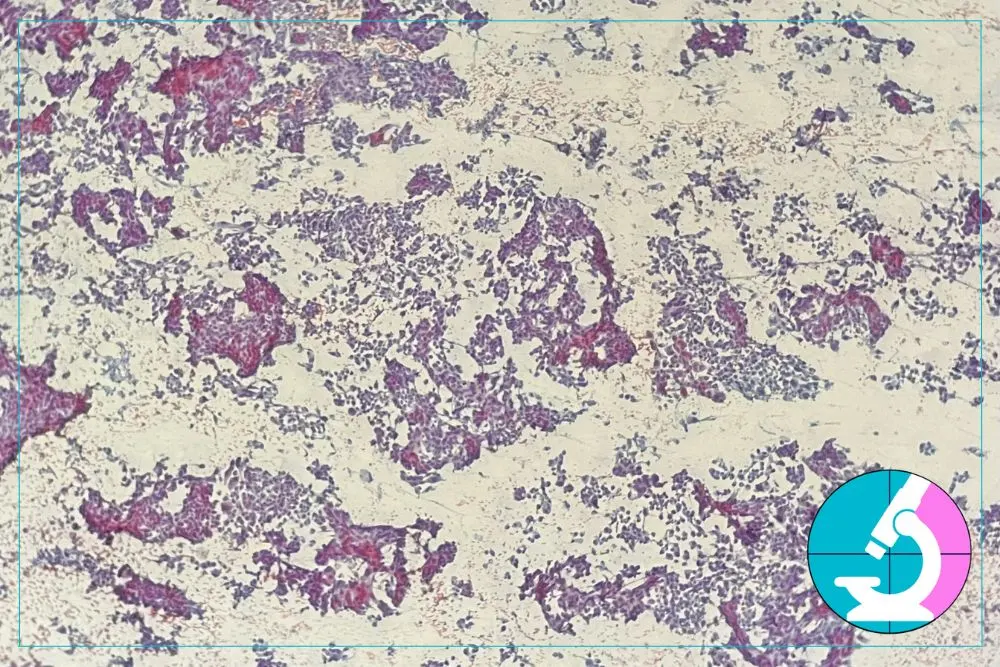
- Pap stain and Diff-Quik stain – two standard stains applied to the cells smeared on slides, each showing cell features in a different way.
- Cell block – leftover cells from the FNA concentrated into a small block of tissue, so thin sections can be cut for additional testing.
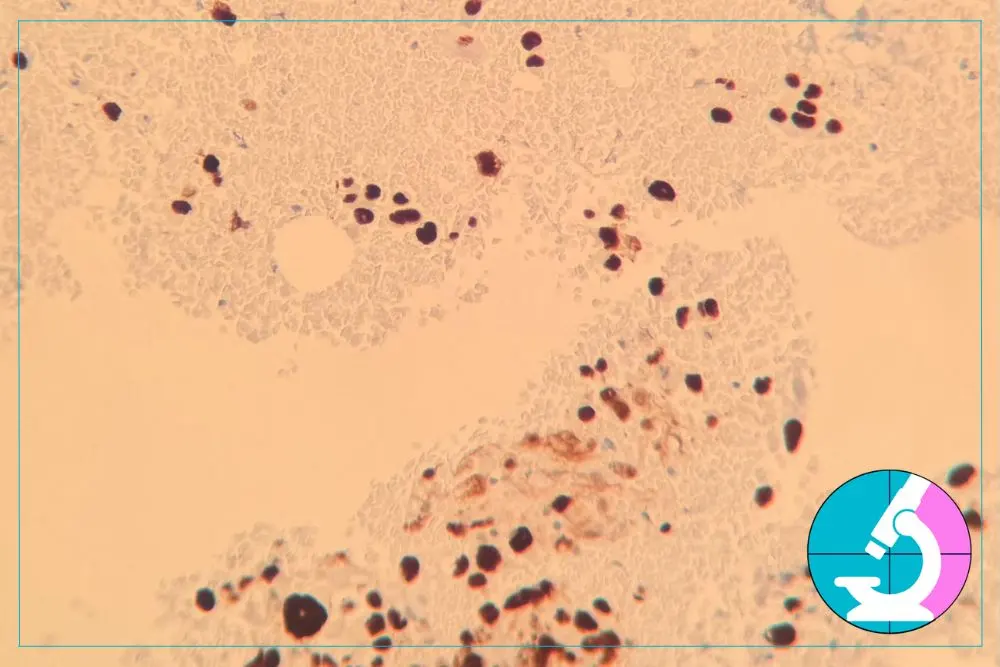
- Immunostains – a panel run on the cell block. Two came back positive, TTF-1 and CK7.
TTF-1 is a stain that is positive mainly in lung and thyroid cells. CK7 is found in a number of cancers, including lung adenocarcinoma. Together, along with the appearance of the cells, the pattern pointed to the lungs as the source. The diagnosis was lung cancer that had spread to a lymph node in the neck.
Why a Fast Diagnosis Matters
“My role is really to get you fast-tracked,” Dr. Nadelman says.
In many health systems, the path from finding a lump to talking with a cancer specialist is slow. A patient may wait weeks for an imaging appointment, more time for a biopsy, and then a couple more weeks for lab results. It can be a month or two before anyone can tell them what they have and who they need to see.
An office FNA can shorten that wait. When the result shows a malignancy, the patient has a diagnosis to bring to an oncologist or surgeon and can move to the front of the line.
FNA does not always replace other testing. Some patients still need a core biopsy or another procedure to collect more tissue for specific studies. In some cases, though, the FNA and cell block provide what the care team needs to start treatment without another biopsy.
Straight to Immunotherapy, No Surgery
Cancer treatment has changed a great deal in recent years. Older chemotherapy worked like a broad attack on fast-growing cells. Many newer treatments are much more specific and are matched to the features of an individual cancer.
Immunotherapy is one of those approaches. It helps the body’s own immune system recognize and attack cancer cells. For some patients with lung cancer, immunotherapy is now a first-line treatment.
For this patient, the diagnosis from his neck FNA opened that door. He did not need surgery. He went directly to immunotherapy, and he is now in remission. Remission means the signs of cancer have decreased or disappeared, and his oncology team will continue to monitor him.
Every patient’s cancer is different, and no single story predicts another person’s outcome. What this case shows is how much a timely, accurate diagnosis can shape what comes next.
When a Neck Lump Should Be Checked
Most neck lumps are not cancer. Lymph nodes often swell during a cold, sore throat, or dental infection and shrink once the illness clears. Dr. Nadelman’s page on swollen lymph nodes covers the common causes.
A lump should be evaluated by a doctor if it:
- Lasts longer than a few weeks or keeps growing
- Feels hard, fixed in place, or does not move under the skin
- Sits low in the neck or just above the collarbone
- Appears without a recent infection to explain it
- Comes with unexplained weight loss, night sweats, ongoing fever, a cough that will not go away, coughing up blood, or hoarseness
A history of smoking or a prior cancer is another reason not to wait. Lung Cancer Awareness Month is a good reminder that lung cancer does not always announce itself in the chest.
Frequently Asked Questions
Can lung cancer first show up as a lump in the neck?
Yes. Lung cancer can spread to lymph nodes in the lower neck and above the collarbone, and in some patients that lump is the first noticeable sign. Most neck lumps are not cancer, but one that persists or feels suspicious should be checked.
Does Dr. Nadelman biopsy the lungs?
No. The lungs are too deep to sample safely in an office and need to be biopsied in or near a hospital. Dr. Nadelman performs FNA on lumps that can be reached, such as lymph nodes in the neck. When cancer has spread to one of those nodes, sampling it can identify the cancer and its likely source.
What are TTF-1 and CK7?
They are immunostains, proteins that pathologists test for to help identify where a cancer started. TTF-1 is positive mainly in lung and thyroid cells. CK7 appears in several cancer types, including lung adenocarcinoma. Pathologists read them together with how the cells look under the microscope.
Will an FNA mean I avoid another biopsy?
Sometimes. The main goal of an FNA when cancer is suspected is to get a diagnosis quickly so you can be fast-tracked to the right specialist. Some patients still need a core biopsy for additional testing. In other cases, the FNA sample provides what the care team needs.
Is an FNA painful?
Most patients feel brief pressure or a pinch. The needle is very thin, and the procedure is quick. Learn more on Dr. Nadelman’s FNA biopsy page.
Do Not Ignore a Lump That Will Not Go Away
This patient’s story began with a lump he did not think much of. A fast FNA turned that lump into a diagnosis, and that diagnosis led him to a treatment that put his cancer into remission without surgery.
If you have a new or unexplained lump in your neck, contact Dr. Nadelman to schedule an FNA in Los Angeles and get clear answers and next steps as quickly as possible.