
October is Breast Cancer Awareness Month
Every October, pink ribbons show up everywhere, from grocery store shelves to social media feeds, and for good reason. October is Breast Cancer Awareness Month, a time to highlight the importance of early detection and routine screening for breast lumps and abnormalities. Learn more on our breast cancer biopsy page.
Awareness only matters if it leads to action. Finding a lump in the shower or getting a callback after a screening mammogram is unsettling, and the days between noticing something unusual and getting an answer can feel endless. That waiting period is often the hardest part of the whole process, and it’s also the part patients have the most control over. The sooner you get evaluated, the sooner you know what you’re actually dealing with, and the sooner you can stop wondering.
This month is a good reminder that breast health isn’t just about awareness campaigns and pink ribbons. It’s about knowing your body, following through on screenings, and understanding your options if something doesn’t look or feel right. For women across Southern California, that often starts with a simple question: who can see me quickly and give me a straight answer? For many, the answer is a same-day or next-day appointment with a doctor who focuses specifically on breast biopsy and fine needle aspiration, rather than treating it as one small part of a much larger practice.
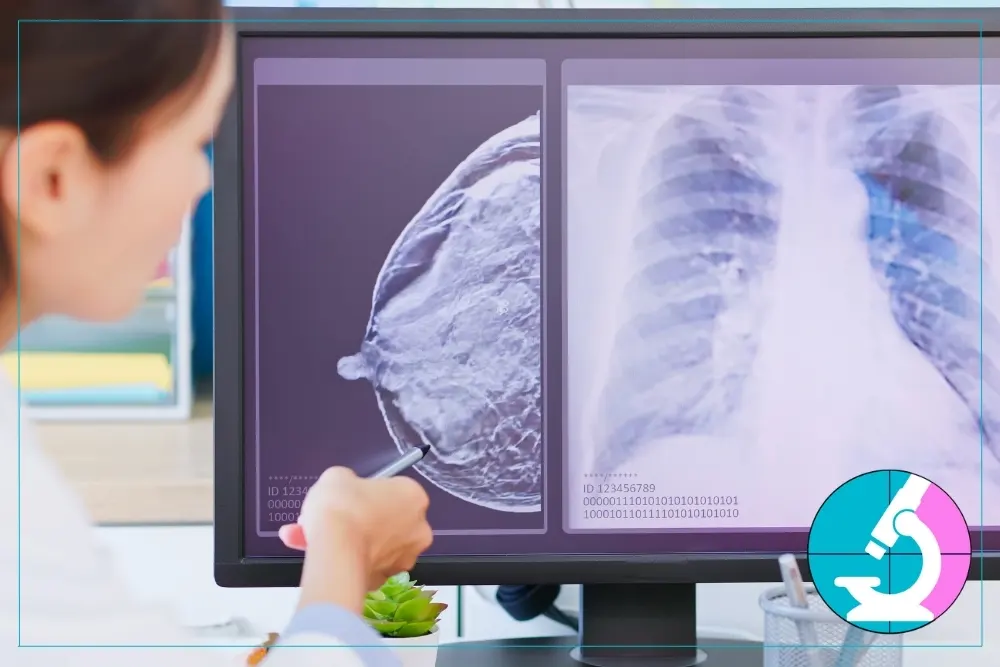
Breast Lumps and Abnormal Findings: When to See a Biopsy Doctor
Many breast lumps turn out to be benign. Cysts, fibroadenomas, and areas of dense or calcified tissue are common, and none of them are cancer. But you can’t tell the difference by touch alone, and neither can your doctor, at least not with certainty. The only way to know for sure is to have the lump evaluated by someone who does this kind of work every day.
Signs That Warrant a Closer Look
- A new lump or thickened area of tissue that wasn’t there before, especially if it feels firm or fixed in place
- Changes in breast size, shape, or skin texture, including redness, dimpling, puckering, or a texture similar to an orange peel
- Nipple discharge that isn’t related to breastfeeding, particularly if it’s bloody or occurs without squeezing
- Persistent pain concentrated in one specific area of the breast rather than general tenderness
- A mammogram or ultrasound report that recommends additional imaging or a tissue sample
None of these findings automatically point to cancer, and many biopsies come back benign, giving patients real peace of mind. But putting off the appointment doesn’t make the lump disappear. It only delays the answer you need. Not sure if a breast lump needs evaluation? Visit our FAQs page or download our free FNA eBook to learn more about warning signs and next steps.
What Is Fine Needle Aspiration? A Faster Path to Breast Biopsy Answers
Fine needle aspiration, often shortened to FNA, is one of the least invasive ways to evaluate a breast lump. A thin needle, similar to the one used for a routine blood draw, collects a small sample of cells from the area in question. There’s no incision, no stitches, and for most patients, no real downtime afterward.
Fine needle aspiration is a minimally invasive, in-office first step for evaluating breast lumps, offering fast and accurate answers, especially when a lump turns out to be benign. Our FNA biopsy page explains how the procedure works.
For patients who feel anxious about the idea of a biopsy, FNA tends to be the least intimidating option. The appointment usually takes well under an hour from start to finish, and many patients are surprised by how little discomfort is involved. There’s no general anesthesia, no operating room, and no lengthy recovery to plan around.
What Happens During an FNA Appointment
- Ultrasound guidance is used to pinpoint the exact location of the lump
- A thin needle collects a small sample of cells directly from the area of concern
- The sample is sent to a lab, where it’s reviewed by a pathologist
- Results are typically communicated within a short window, often just a few days
Because the entire process is done in the office with local numbing rather than sedation, most patients drive themselves home and return to normal activities right away.
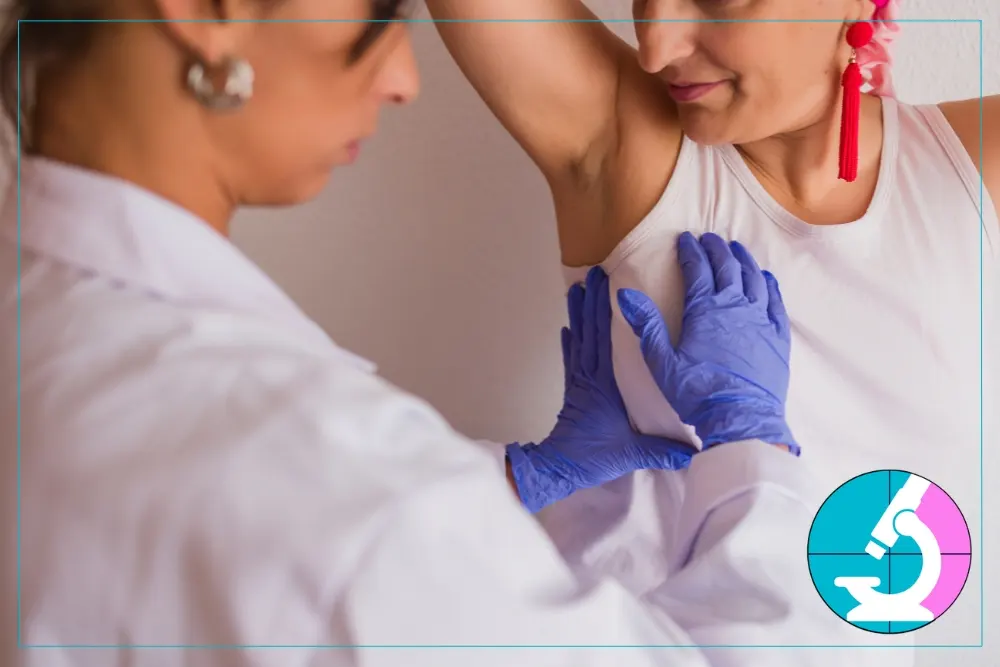
What FNA Can and Can’t Tell You About a Breast Lump
FNA is excellent at answering the first and most important question: are there cancer cells in this lump or not? When the answer is no, FNA gets you that answer quickly while doing very little “harm” to your body. No incision, no scar, no recovery.
When FNA does find malignant cells, though, a breast diagnosis usually needs more information than a small sample of cells can provide. Two things in particular require more tissue:
- Whether the cancer is invasive. To tell if cancer has spread beyond where it started, the pathologist needs to see the tissue’s structure, not just individual cells. FNA can confirm that malignant cells are present, but it usually can’t distinguish invasive breast cancer from non-invasive conditions such as ductal carcinoma in situ (DCIS), often called stage 0 breast cancer, or lobular carcinoma in situ (LCIS). Sometimes a well-preserved “cell block” from the FNA sample makes this possible, but often it doesn’t.
- Receptor markers that guide treatment. Today, breast cancers are routinely tested for estrogen receptor (ER), progesterone receptor (PR), and HER2/neu. Treatment depends on these results. For example, tumors that express hormone receptors may respond to anti-estrogen therapy. These tests are most reliable on a larger tissue sample, which some cell blocks can provide, but not all.
That’s why, if an FNA shows cancer, a core needle biopsy or excisional biopsy will typically follow to gather the tissue needed for complete staging and treatment planning. FNA doesn’t replace those procedures. It helps determine who actually needs them.
Why Fine Needle Aspiration Is a Valuable Tool Alongside Traditional Breast Biopsy
Core needle and surgical biopsies play an essential role, especially once cancer has been found. But since many breast lumps turn out to be benign, starting with FNA can spare a lot of patients a more invasive procedure they never needed.
- Recovery time: little to none, and most patients are back to their normal routine the same day
- Scarring: no incision means no visible scar to worry about later
- Speed: results often come back faster than they would from a surgical pathology lab
- Comfort: performed with local numbing only, meaning far less discomfort than a surgical procedure
- Cost: FNA is typically less expensive than a surgical biopsy since it doesn’t require an operating room, anesthesia team, or extended recovery time
FNA isn’t right for every case. Some findings call for a core needle biopsy or surgical excision from the start, depending on size, location, imaging results, or prior history. That’s exactly why the first step should be an evaluation with a doctor who specializes in making this decision and can tell you honestly which path fits your situation.

Finding an FNA Doctor for Breast Cancer Biopsy in Los Angeles
If you live in Los Angeles, Orange County, the Inland Empire, or anywhere else in Southern California, you shouldn’t have to settle for a months-long wait at a large hospital system just to get a lump checked. Dr. Nadelman’s practice in Beverly Hills is built around a simple idea: patients dealing with a breast lump or an abnormal mammogram shouldn’t be left waiting weeks for a biopsy doctor to have an opening.
Dr. Nadelman has spent her career focused specifically on fine needle aspiration, not as one service tucked among many others, but as her primary specialty. You can read more about her background and training on our about page. That kind of focus matters when you’re the one waiting on results that could change your next step.
Patients regularly make the drive from San Diego, Riverside, Ventura County, and the Central Valley because same-day and next-day appointments are hard to find elsewhere. For patients who can’t make the trip, house calls are available throughout California, which has been especially valuable for older patients or anyone recovering from a recent surgery or procedure.
Fine needle aspiration isn’t limited to the breast, either. Dr. Nadelman also performs FNA for thyroid nodules; if you’re dealing with a suspicious thyroid finding, our thyroid cancer page has more information. She also evaluates swollen or enlarged lymph nodes near the breast and underarm, which sometimes need their own biopsy to rule out something more serious. Details are available on our swollen lymph nodes page.
Frequently Asked Questions About Breast Biopsy and Fine Needle Aspiration
Does fine needle aspiration hurt?
Most patients describe the sensation as a quick pinch or pressure, similar to a blood draw, rather than significant pain. A local numbing agent is used beforehand, and the sampling itself takes only a few minutes. Any soreness afterward is usually mild and gone within a day.
How long does it take to get FNA results?
Turnaround time depends on the lab, but results are often available within days rather than the one to two weeks that can follow a surgical biopsy. Dr. Nadelman’s office follows up directly with patients once results are in, rather than leaving them to track down answers on their own.
Is fine needle aspiration as accurate as a surgical biopsy?
When performed by an experienced biopsy doctor and reviewed by a skilled pathologist, FNA is highly accurate at determining whether a breast lump contains cancer cells. Where it’s more limited is in the details that come after a cancer diagnosis, such as whether the cancer is invasive and which receptor markers (ER, PR, HER2) it expresses. Those questions usually require the larger tissue sample a core needle or surgical biopsy provides. The goal is to get a clear answer with the least invasive method first, and move to a larger biopsy only when it’s truly needed.
If FNA shows cancer, why would I need another biopsy?
A cancer diagnosis is only the first piece of the picture. Your care team also needs to know whether the cancer is invasive or in situ (such as DCIS, or stage 0), and whether it tests positive for estrogen receptor, progesterone receptor, or HER2/neu, because these results shape your treatment options. FNA can sometimes provide this through a cell block, but in most cases a core needle or excisional biopsy is needed to gather enough tissue.
What happens if my FNA results come back abnormal?
An abnormal result doesn’t automatically mean cancer, but it does mean further evaluation is needed. Dr. Nadelman walks patients through what the results actually show and what the next steps look like, whether that’s additional imaging, a core needle or excisional biopsy, or a referral to an oncologist or breast surgeon for treatment planning.
Do I need a referral to schedule a breast biopsy with Dr. Nadelman?
In most cases, no referral is required. Patients can schedule directly, often with same-day or next-day availability, which is part of why so many people throughout Southern California choose to make the drive to Beverly Hills rather than wait for an opening elsewhere.
Schedule Your Breast Biopsy With Dr. Nadelman
Breast Cancer Awareness Month is a reminder that early answers matter, and waiting rarely makes a lump or abnormal finding easier to deal with. This October, don’t wait. Contact Dr. Nadelman to schedule a breast biopsy in Beverly Hills, with next-day appointments and house calls available throughout California.